
250 Years of American Design: Our Designers Reflect
As America prepares to celebrate its 250th anniversary, we asked our Design Consultants to reflect on a few questions about American design: What makes it uniquely American? Which designers and movements have left a lasting impression? And what does American design look like today?
From Ralph Lauren and Frank Lloyd Wright to Art Deco, Mid-Century Modern, and Americana decor, here’s how four designers define American design through their own lens.
Amy: Celebrating Americana Through Collected History
For Amy, American design is rooted in history, nostalgia, and objects that tell a story.
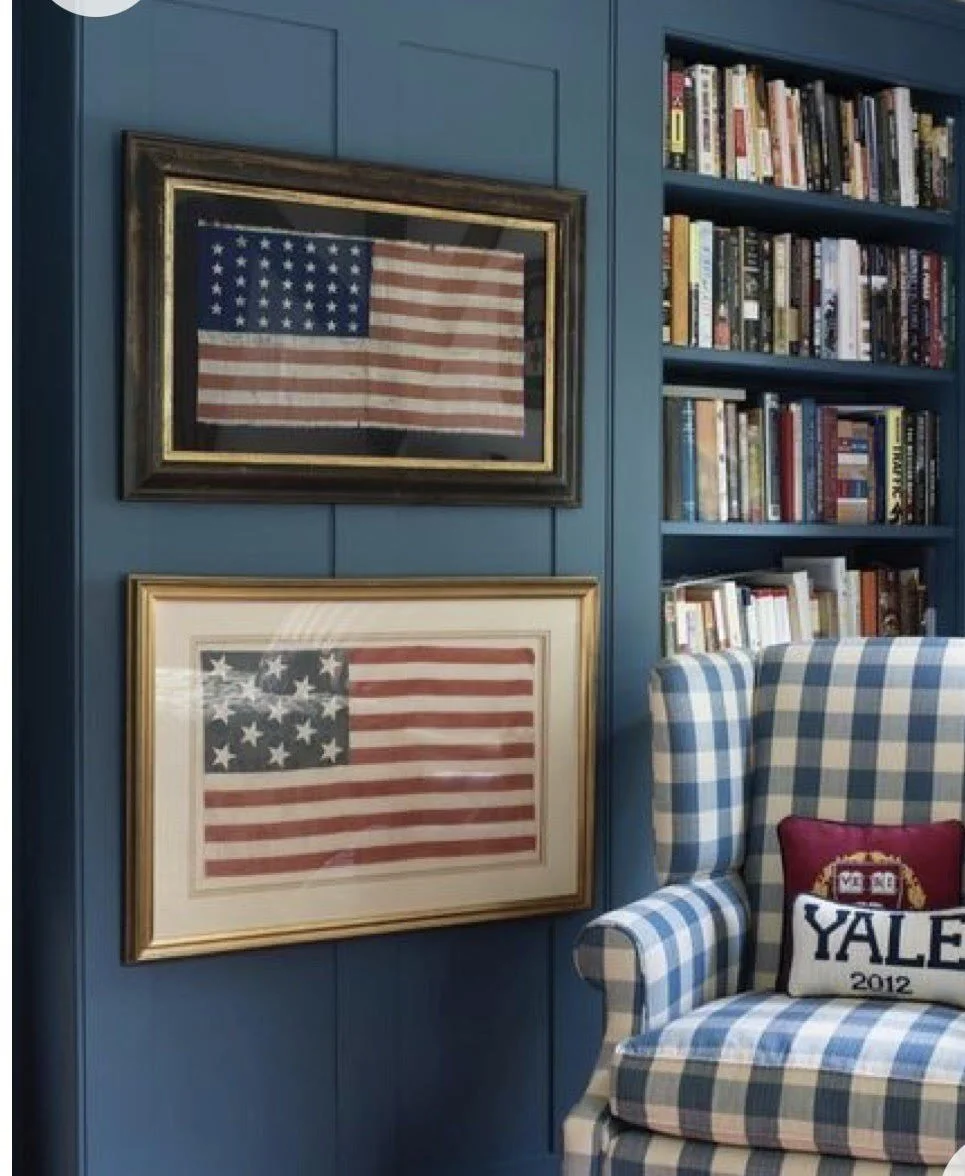
“I like the idea of leaning into the vintage/antiques craze with Americana decor. Framing vintage American flags, for instance, instantly creates that cottage Americana look.”
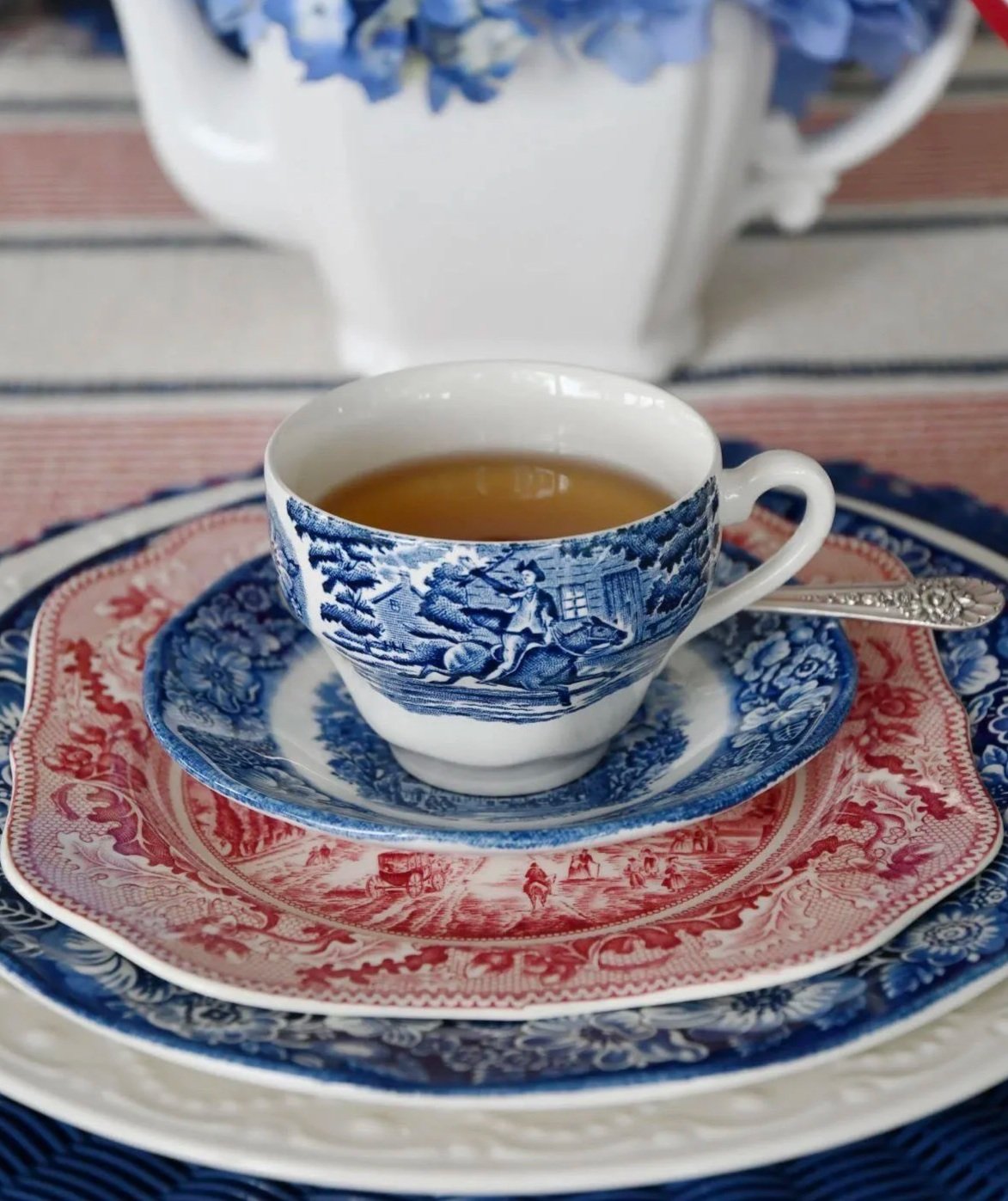
Beyond vintage flags, Amy sees blue and red transferware as another hallmark of classic decor that brings a sense of history, character and collected charm to modern American interiors.
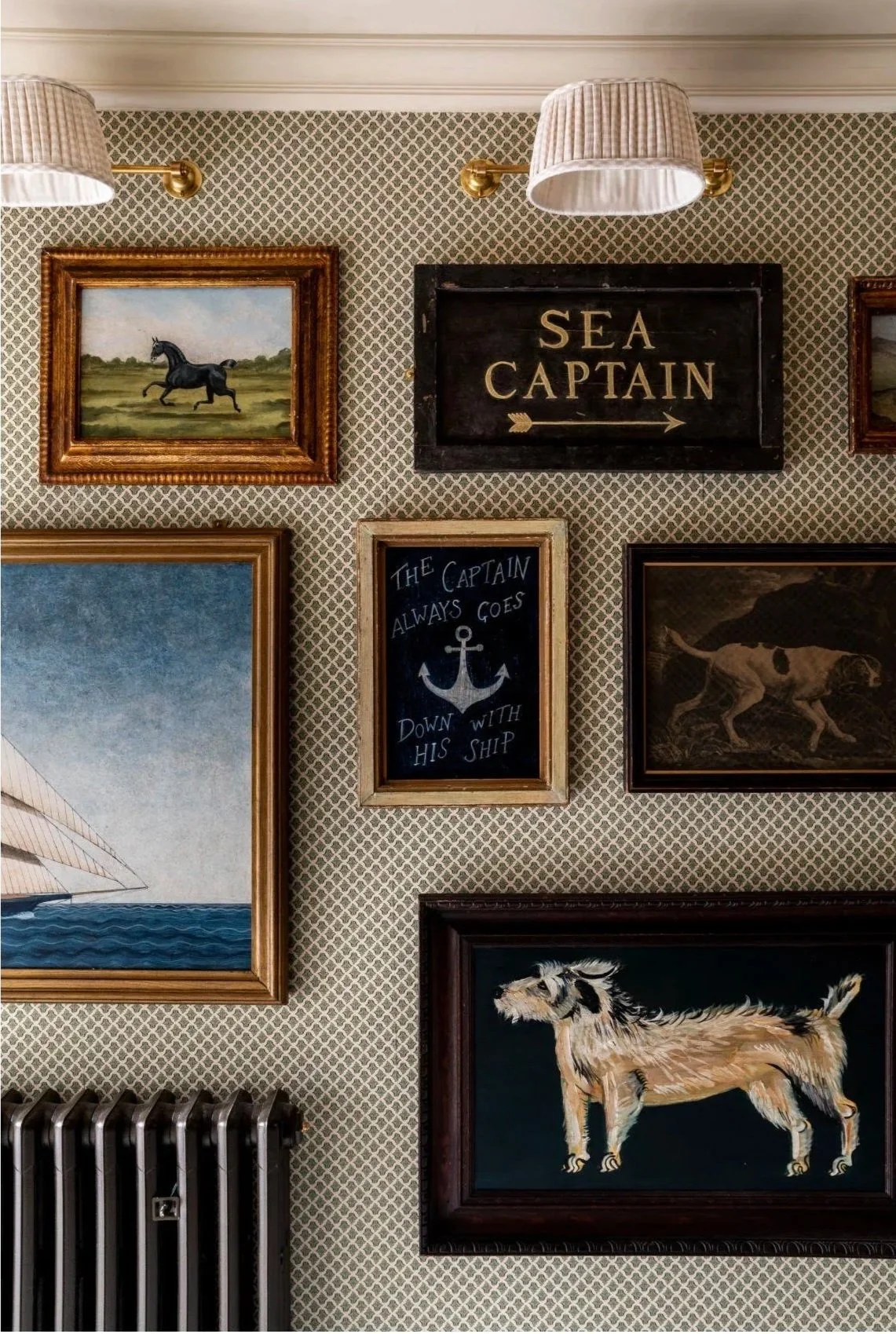
She also points to the Nantucket aesthetic, where maritime themes, equestrian details, and a relaxed coastal aesthetic create a distinctly American style.
And, when discussing American style icons, one name rises to the top. “Of course no one can think of Americana decor without thinking of Ralph Lauren,” she says. His ability to weave together heritage, luxury, sport and lifestyle has helped define American Style for generations.
Heather: The American Melting Pot
Heather describes American design as a carefully curated mix of influences.
“American design, to me, is like a melting pot of curated designs from different eras and styles.”
Heather’s definition captures one of the things that makes American interiors so interesting. Rather than following a single design tradition, American homes often pull inspiration from many different sources.
When it comes to American styles she loves, Mid-Century Modern design tops the list. Her design influences include Nate Berkus, Mary McDonald, and Windsor Smith.
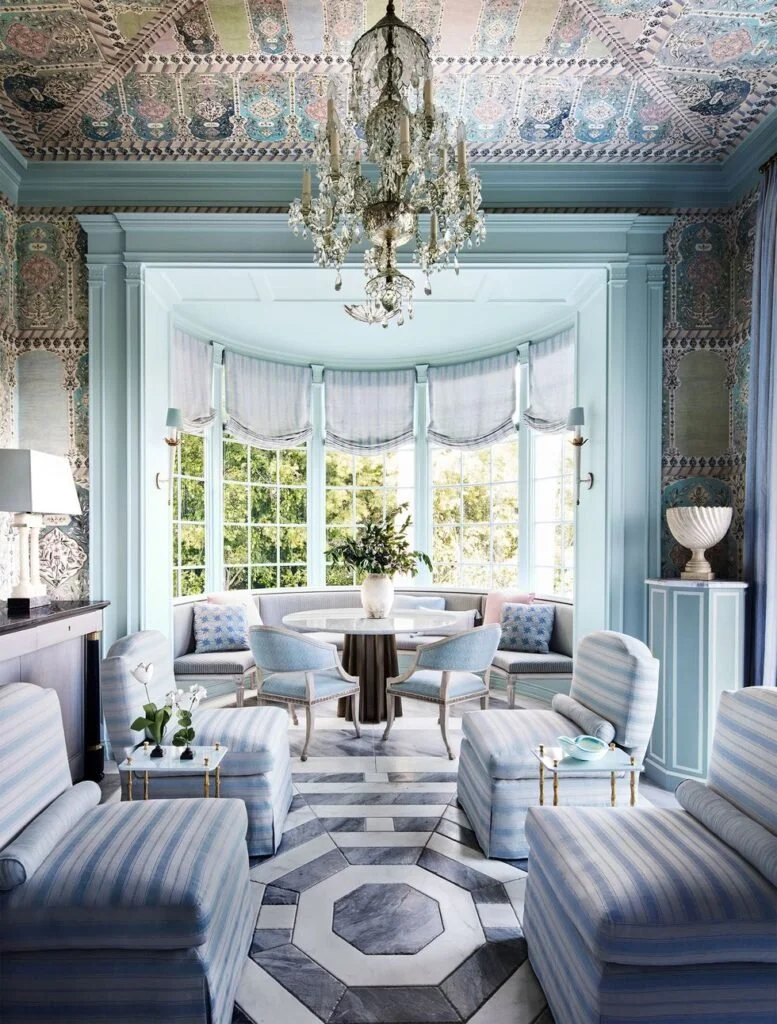
A maximalist tea room designed by Mary McDonald, steeped in Benjamin Moore’s Brittany Blue.
Looking at current trends, she is excited to see maximalism making a comeback in American interiors and beyond. The return of layered rooms, collected objects, and personal expression reflects a broader shift toward interiors that feel unique to the people who live in them.
“More is more!”
Cherisse: Design Without Rules
For Cherisse, American design stands apart because it isn’t tied to any one long-standing tradition.
“Since America is such a young country, comparatively speaking, the design is more distinct and personal, drawing from a variety of traditions and not just one.”
Cherisse sees American design as something that evolves alongside the way people live, often reflecting the way people are living at a particular moment in time and embracing new ideas and innovations along the way. She points to movements like Mid-Century Modern, with its streamlined forms and clean lines that emerged in response to the changing lifestyles and economic realities of the post-World War II era.
The styles that resonate most with her are Art Deco and Mid-Century Modern, finding appeal in their distinct shapes, silhouettes, patterns, and colors. “The color palettes from these eras always strike a chord with me. They are a little more unexpected than others; not pure or primary, but subtle variations of shades that sit in between more common palettes. Art Deco spaces always seem to pack drama, and I am here for a moody room.”
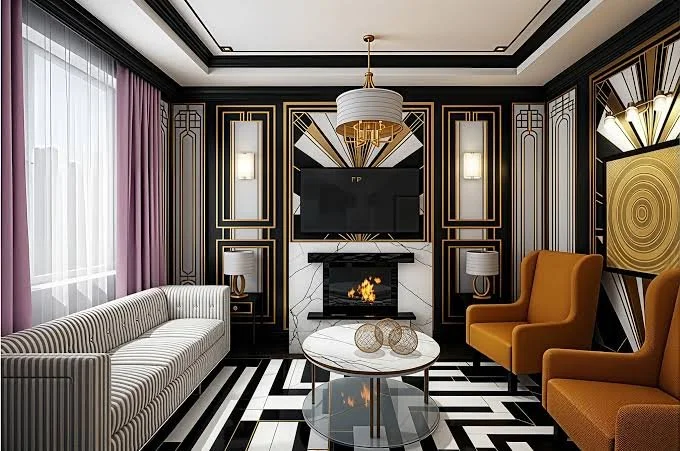
When asked what excites her most about American design today, her answer centered around seeing people embrace their own individuality and personal expression. “I think people now realize they really can make their space a reflection of themselves instead of feeling like there are ‘rules’ they have to follow. Design should be fun and invigorating, not forced.”
Ana: From Coast to Coast
For Ana, American design is defined by its diversity.
“American design is set apart by its relaxed and diverse approach. As diverse as our landscape is, so is our design.”
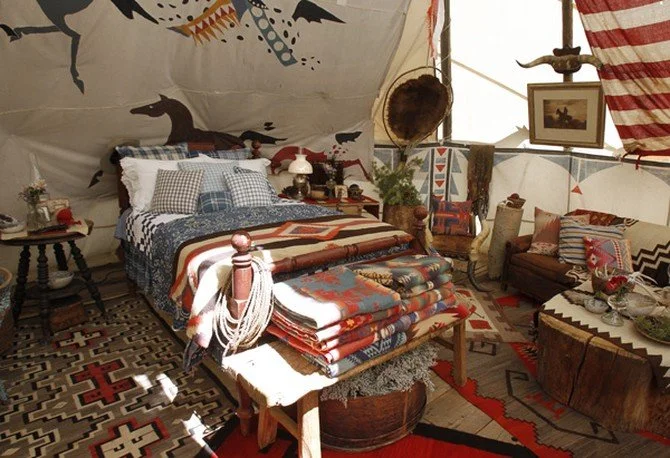
Rather than pointing to a single style, she sees American design as a collection of regional influences. From the elegant, relaxed aesthetic of Nantucket to the bright citrus colors of Palm Beach, from the laid-back West Coast lifestyle to the Cowboy aesthetic of the American West, each region contributes something unique to the broader American Design story.
When asked who best represents American design, Ana immediately points to Ralph Lauren. “His brand has covered everything from fashion to home and lifestyle, covering every aspect of what it means to be American.” His ability to draw inspiration from coast to coast while creating a recognizable lifestyle has made him one of the most influential voices in American design.
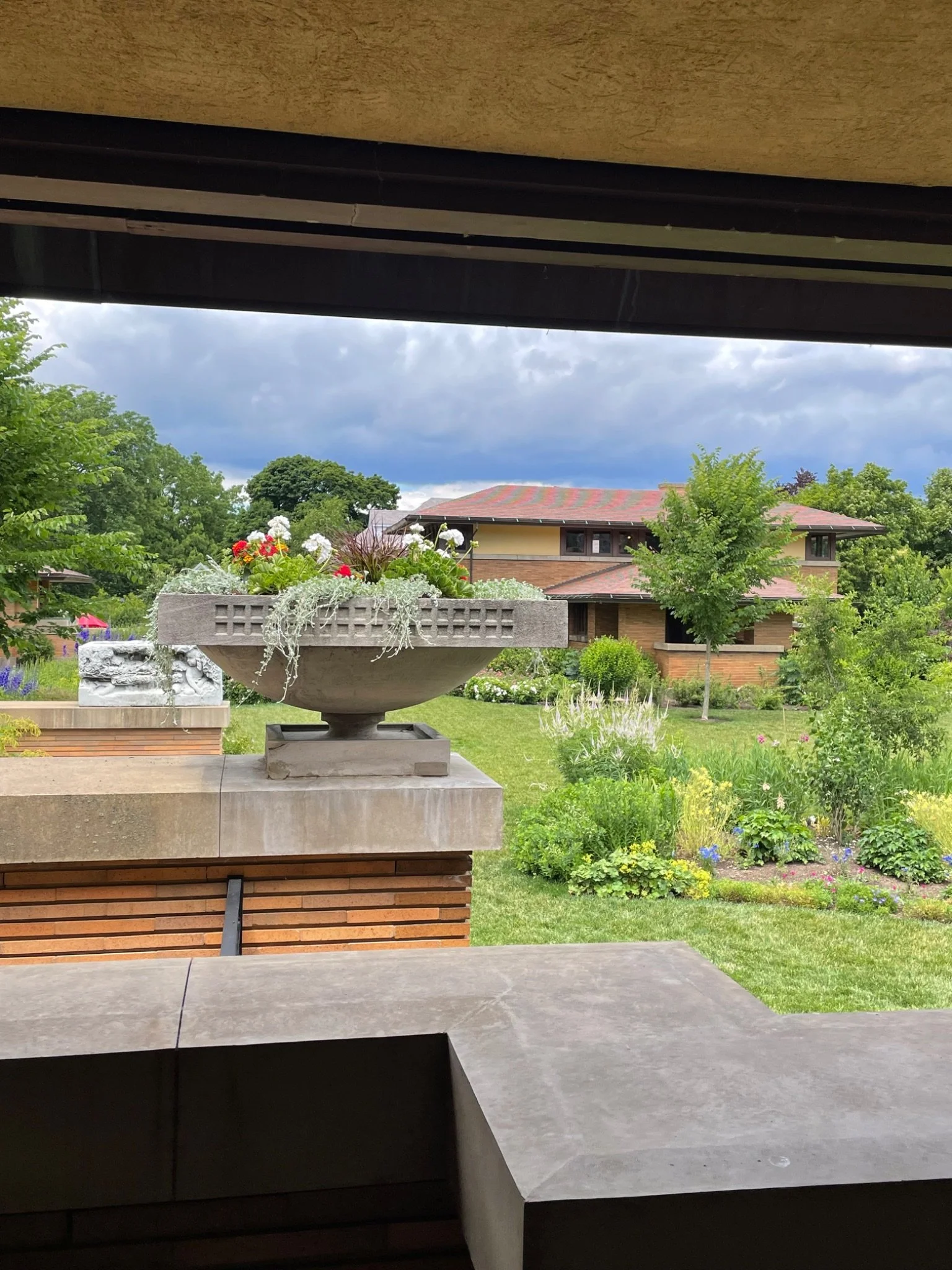
Ana also highlights architect Frank Lloyd Wright as one of America’s greatest design treasures. She admires the way he used the surrounding landscape as both inspiration and an integral part of his work, designing not only the structures themselves but often the furnishings, decor, gardens, and outdoor spaces as well. Having visited Fallingwater in Pennsylvania, the Martin House in Buffalo, New York, and Taliesin West in Scottsdale, Arizona, Ana has seen firsthand how each project responds uniquely to its environment. “Each of these homes is completely different from one another, encompassing the landscape around it to seem as if it naturally came from it.”


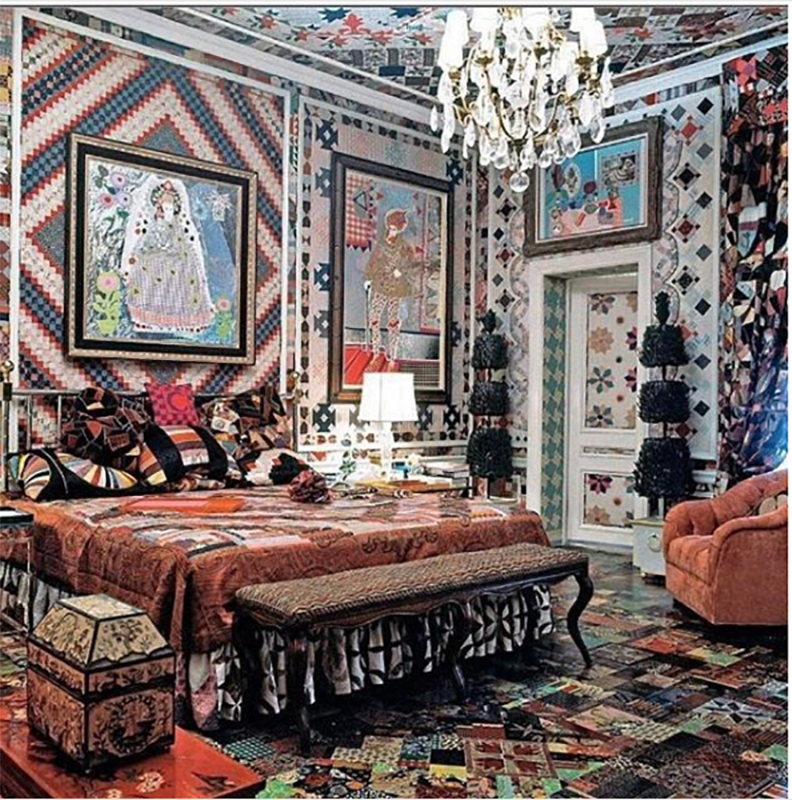
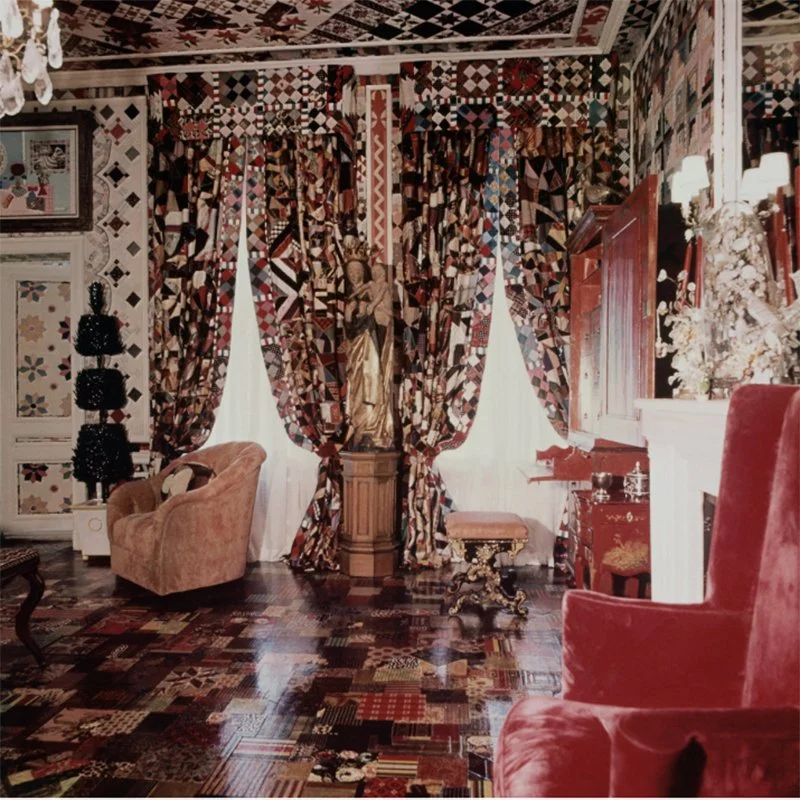
Beyond architecture, Ana draws inspiration from several influential American women whose work reflects the eclectic nature of American design. She cites Mary McDonald for her globally inspired interiors that feel collected and refined, and Gloria Vanderbilt for her fearless approach to layering antiques, textiles, and personal history. One image that has stayed with her and been a source of inspiration for years is Vanderbilt’s New York Bedroom, draped floor-to-ceiling in quilts. Ana loves the way she mixed antiques and historic objects with modern touches to create a seamless aesthetic.
Her final inspiration isn’t a designer at all. “Nancy Meyers has inspired more homes and rooms since the early ‘90s than just about anyone.” The comfortable, collected, lived-in homes featured in Meyers’ films have influenced countless interiors and continue to shape how many people envision their homes today.
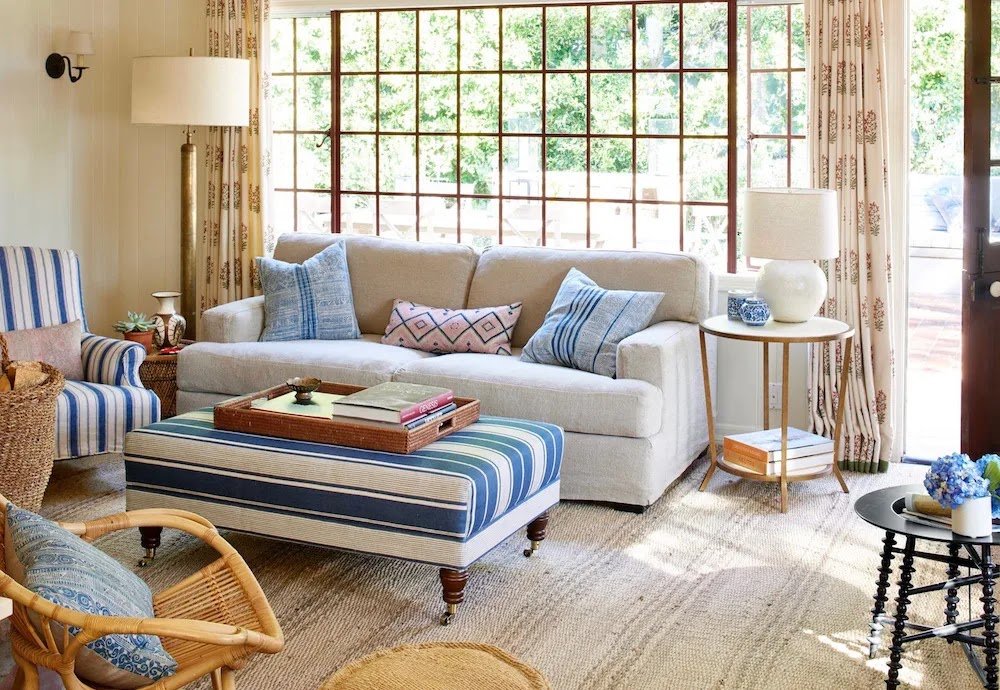
Together, Ana’s influences reflect what she sees as the defining characteristic of American Design: the ability to pull inspiration from many places, styles, and perspectives to create something entirely its own.
Looking Ahead
Two hundred and fifty years after the nation’s founding, American design continues to tell a story shpaed by different regions, cultures, traditions, and generations. Its greatest strength has always been its ability to adapt and evolve while making room for personal expression. Looking through the eyes of our designers, it’s clear that American design isn’t designed by a single aesthetic; it’s designed by the people who make it their own. While styles come and go, the desire to create spaces that feel personal, welcoming, and meaninful remains. As we look ahead to America’s 250th anniversary, we’re grateful for the designers, makers, and homeonwers who continue to shape what American design means today.